Connections / Design study / CABLE-STUDS-R6
One continuous receiver.
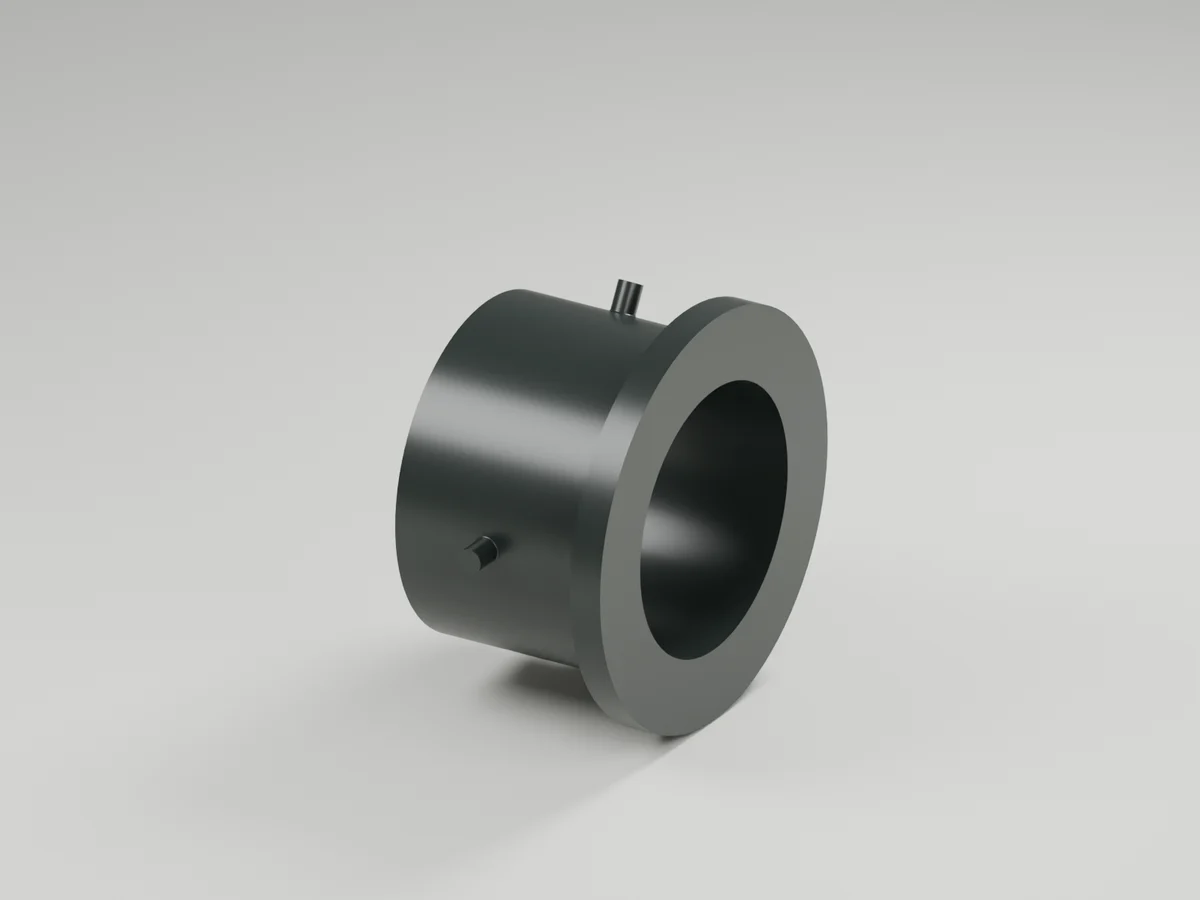
Integral bosses replace separate bayonet studs.
Retained development study. Dimensions, names and checks belong to this revision—not automatically to the retrofit-only product. Manufactured tank shells are deferred. No installation instruction, certification or manufacturing release is represented.
The source reasoning
Why this detail was investigated.
Joining the bosses into the receiver removes separate stud interfaces. Material continuity in CAD is evidence of geometry, not a demonstrated load rating.
Read the research and limitsResearch record
The detail behind
the study.
Source-linked work for this revision. Reported checks describe the stated model or test; physical qualification and applicability to the current retrofit remain separate.
R6 replaces the three separate, unattached bayonet studs with integral bosses on a single receiver body. Each boss overlaps the body before fusion and receives a0.20 mm root blend. No blind screw holes or additional seal-wall penetrations are introduced.
The boss tips, diameters and bayonet locations remain at the previous nominal coordinates. The source records the former stud identifiers as integral features of the receiver, preserving their logical identity. The complete assembly decreases from457 to454 separate solids.
Geometry and manufacturing scope
The receiver and its three bosses form one valid solid. Each pre-fusion root overlaps the receiver by5.5554 mm³; this verifies material continuity, not strength. The part fits within a nominal50 mm diameter by30 mm long cylindrical stock envelope. That is a preliminary machining-stock check, not proof of cutter access, fixturing or process capability.
A single-piece metal receiver is a manufacturing candidate. Alloy, heat treatment if applicable, finish, corrosion compatibility, tooling, machining sequence and controlled tolerances remain unselected. The graphite render color is presentation styling, not a material specification. Small root blends and internal keyway corners need explicit manufacturing review.
The complete R5 gland and its dimensional/volume-growth assumptions are retained. No new seal rating follows from making the bosses integral. Retaining-ring installation, deliberate bayonet latch/preload, electrical terminations and environmental qualification remain open.
Checks and supplied files
888 nominal checks pass: separate-body validity, fused roots, rigid-part interference, sampled bayonet rotation and insertion, continuous seal land, stock containment and both STEP round trips. Two focused tests pass, including additional intermediate rotation positions. A copied-source rebuild matches455 imported solids across the standalone receiver and complete assembly. The native receiver render was reopened, its source mesh verified and the image visually reviewed. Full regression remains running as session43947.
integral-receiver.step: the one-piece receiver.
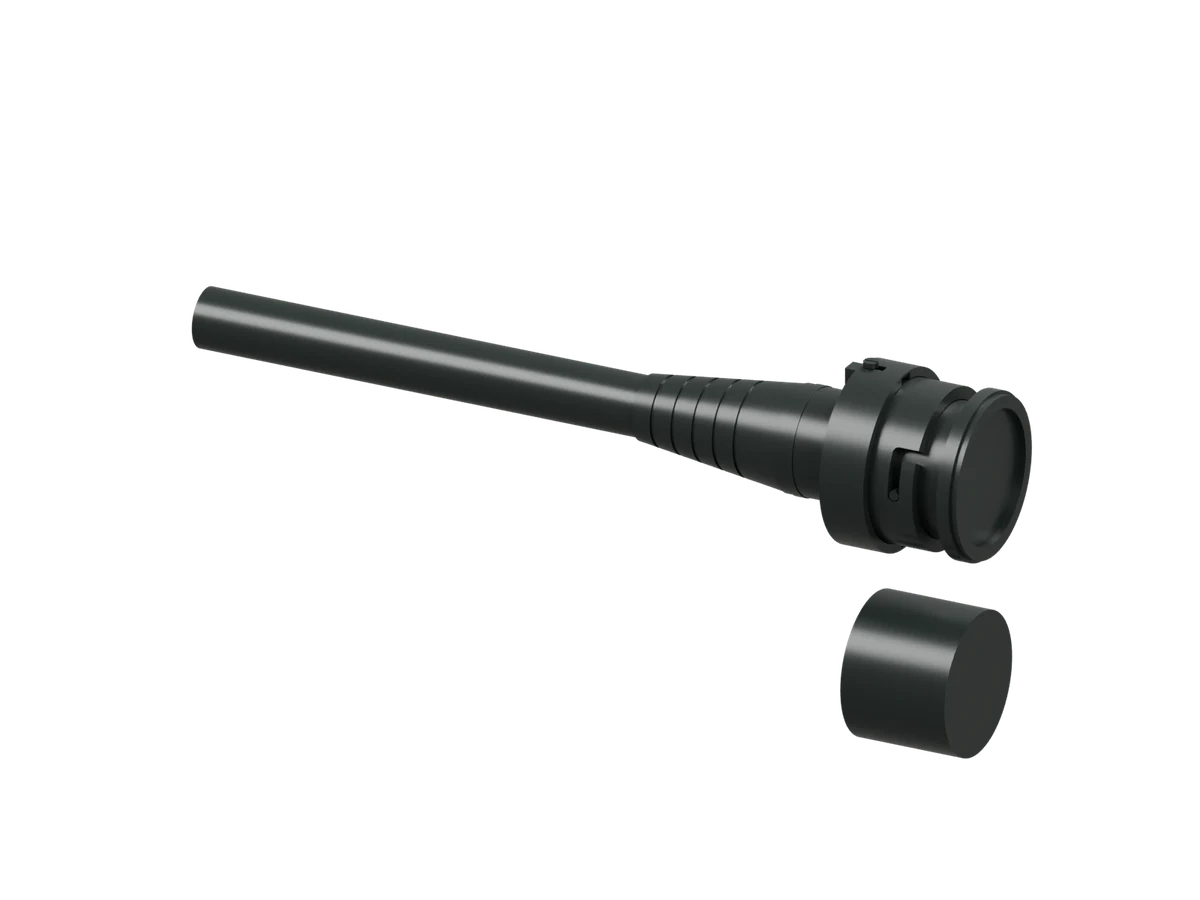
complete-termination.step:454-solid cable/connector assembly.
inspection.blend / inspection.png: native receiver inspection view.
record.json: check details, source hashes, logical-feature mapping and limitations.
The integral bosses establish a modeled load path. Pull force, torque, impact, fatigue, allowable deflection and resulting material/process requirements must still be defined and validated. This revision is not a released manufacturing design.
Receiver STEP · Complete assembly STEP
Source and revision record
Source: cable-studs-r6/index.html
Source SHA-256: 038bcad90d3ce0eb9703b6257f851b7c4a273c9c079a84de3648b6c7107be7d0
Geometry and images describe this development revision. Current product ratings and manufacturing release require separate qualification.
Keep exploring the research.
Engineering records / Engineering record
Cable Ring Installation Audit
Geometry, analysis and remaining engineering work for Cable Ring Installation Audit.
Engineering records / Engineering record
Cable Seal Audit
Geometry, analysis and remaining engineering work for Cable Seal Audit.
Connections / Development CAD
Link threaded stops
Inspect the latest complete termination geometry with modeled threaded stops.
Return to the current product.
Explore the retrofit-only platform and its compatibility, installation and service objectives.
Explore the retrofit